
Technical innovation that fails to solve a real problem is not innovation. It’s just expensive noise.
Sunday, October 26, 2025

written by
Co/Founder

Innovation is Not a Trend: It is a Responsibility We Didn’t Ask For
In the world of e-commerce, we hear promises of "digital transformation" three times a week. Startups promise to reinvent the wheel. Consultants sell roadmaps copied from other consultants. But the truth no one wants to admit is this: 90% of "innovation" is simply wallpaper over unresolved problems.This article isn't about what is possible with technology. It's about what is actually worth doing.
The Consumer is Not a Skinner Pigeon
In 1954, David Ogilvy wrote: "The consumer is not a moron, she is your wife." Sixty years later, in the AI era, this remains the most ignored sentence in history.
I see stores implementing AI just because "it's trendy."
Chatbots that don’t understand human language.
Recommendations so illogical they seem programmed by a blind monkey.
Complexity where a simple search bar would suffice.
The confusion stems from the wrong question. Marketing directors ask: "How can I use this new tech?" They should be asking: "What concrete problem does my customer have right now?"
Your customer wants one thing: a clear path from desire to possession. If your innovations hinder that, they aren't innovations. They are sabotage disguised as modernity.
AI Must Earn Its Keep
Invisible technology is the best technology. When an algorithm sorts products based on what I actually want, I don't think about AI. I think: "Wow, this store really gets me."
That is the AI that works. The AI that fails is the one that announces itself. The chatbot that says "Hi! I am an intelligent assistant!" has already lost.
But there is another dimension: The Cost. Implementing serious AI costs money. And this investment has a single legitimate purpose: to turn into revenue. Not PR. Not likes. Sales.
Ask yourself:
Does this algorithm increase conversion rates?
Does it reduce cart abandonment?
Does it make the customer buy again?
If the answer is no, it is a vanity project. Technology doesn't sell. The result of technology sells.
The False Dilemma: Beauty vs. Speed
Every year I hear the same fight. Designer: "I want to make something magnificent." Developer: "It will make the site slow." Result: A mediocre compromise. Not beautiful, not fast. Just sad.
This dilemma does not exist. Beauty and speed are not enemies. They are allies. Good design is essentially efficient.
However, there is a hierarchy of priorities. If you must choose between a beautiful site that loads in 5 seconds and a mediocre site that loads in 2 seconds, the mediocre site wins.
Why? Biology. After 3 seconds of waiting, 40% of users abandon. It doesn't matter how beautiful your design is if no one stays long enough to see it.
True mastery is finding the 2-3 visual effects that create 80% of the impact, and ruthlessly cutting the rest.
Research as a Shield Against Fashion
The e-commerce market is infested with FOMO (Fear Of Missing Out). "Competitor X launched a Metaverse store. We must do it too!"
Few stop to ask: Do our customers want it? Have we measured the ROI?
This is where serious research comes in. It isn't research for fun. It is protection against charlatans. True research means knowing when to say NO before you burn budget on something that won't work.
We have advised clients against headless commerce when it didn't make economic sense. That isn't conservatism. That is responsibility.
The Responsibility of Those Who Know
There is a dangerous assumption: "If I know how to use a technology, I should use it." False.
True skill isn't knowing what is possible. It is knowing what is worth doing. When an e-commerce store adds complexity that slows down the site or introduces features customers didn't ask for, the experts have failed.
Here is our rule: Is our customer better off? Is their buying journey simpler?
If Yes: Implement.
If No: Discard. No matter how "cool" the tech is.
Everything else is just fashion. And fashion fades. Solved problems remain forever.
More Briefs
Friday, November 7, 2025
Written by
Alex Andone
Your Site is Beautiful. Too Bad it Doesn’t Sell.
A perfect interface has zero value when the server collapses at the first whip-crack of real traffic.
I'll tell you a secret developers won't tell you: most e-commerce sites fail not due to a lack of vision, but due to an unforgivable negligence towards reality. We build cathedrals of elegant code. We create mesmerizing animations. Then Black Friday arrives. And we discover we built a magnificent theater with no plumbing system.

Tuesday, November 4, 2025
Written by
Mauro Morero
Accessibility is Not Charity. It is Pure Business.
The Uncomfortable Truth: You Are Closing Your Wallet to 1 in 6 Europeans.
In 2025, Europe isn't giving away gifts. The new Digital Accessibility Act is not a favor to the disabled. It is a lifeline thrown to entrepreneurs who still haven't realized they are ignoring a parallel market worth billions. Many brands are scrambling with the mindset of a driver trying to avoid a speeding ticket: "Let's do this to avoid the fine." It is the most expensive strategic error you can make. Because you are looking at the problem from the wrong side of the mirror.

Tuesday, October 21, 2025
Written by
Alex Andone
Headless: Everyone Talks About It, No One Knows What It Is
Headless is Not a Trend. It’s the Moment You Stop Being a Prisoner of a Theme.
You will hear this word everywhere: Headless. The problem is that no one can explain what it is without boring you to death. Let's solve that problem now. No jargon. Just business.
Tuesday, October 14, 2025
Written by
Mauro Morero
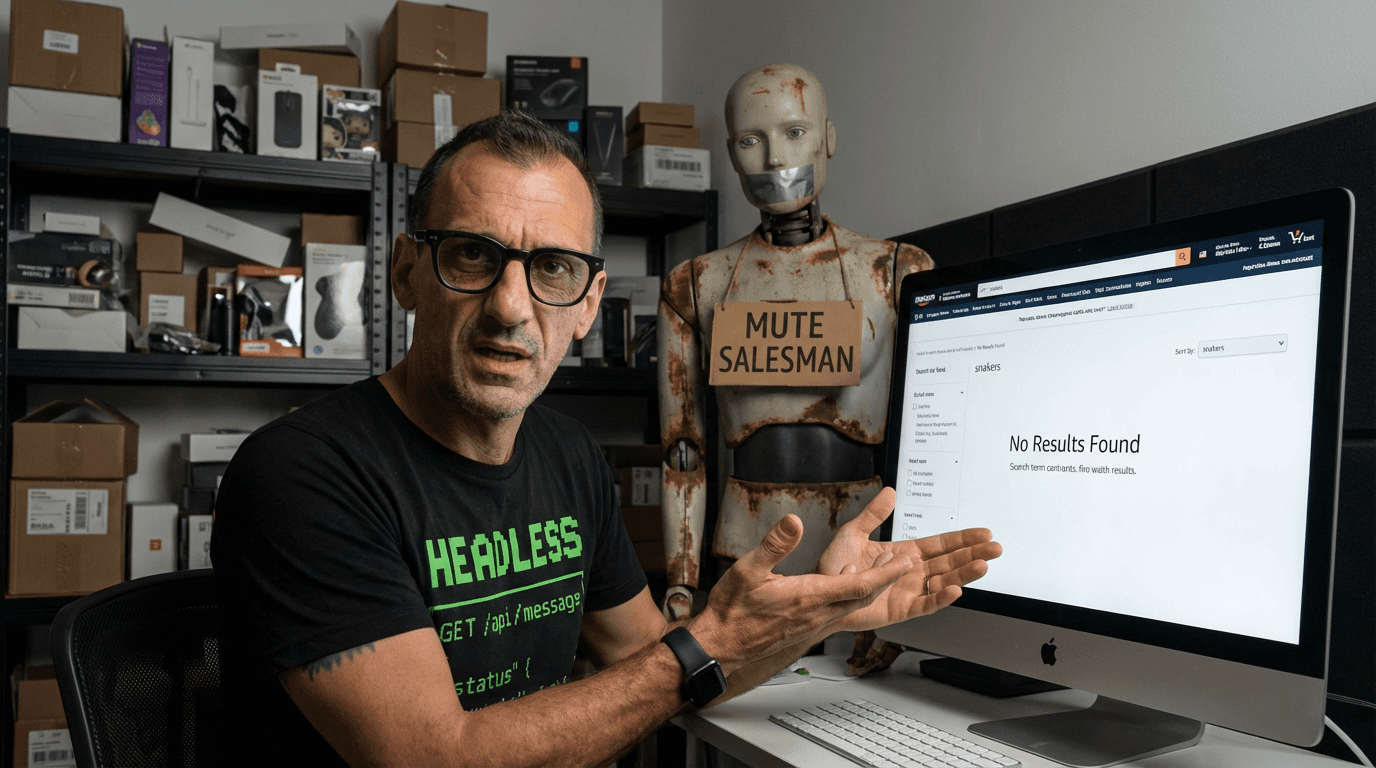
Your Best Salesperson is Mute (And You Are Ignoring Him)
Your site’s search bar converts three times better than any page you have ever designed. Yet you ignore it like the gross profit of a failed startup.
Walk into a store and ask the clerk: "Do you have red running shoes?" If he stares at you in silence or leads you to the cookware aisle, what do you do? You leave. Naturally. Yet, this is the service you offer every single day to your online customers, at scale, with a chilling presumption: that they will keep browsing anyway.
Wednesday, October 1, 2025
Written by
Alex Andone
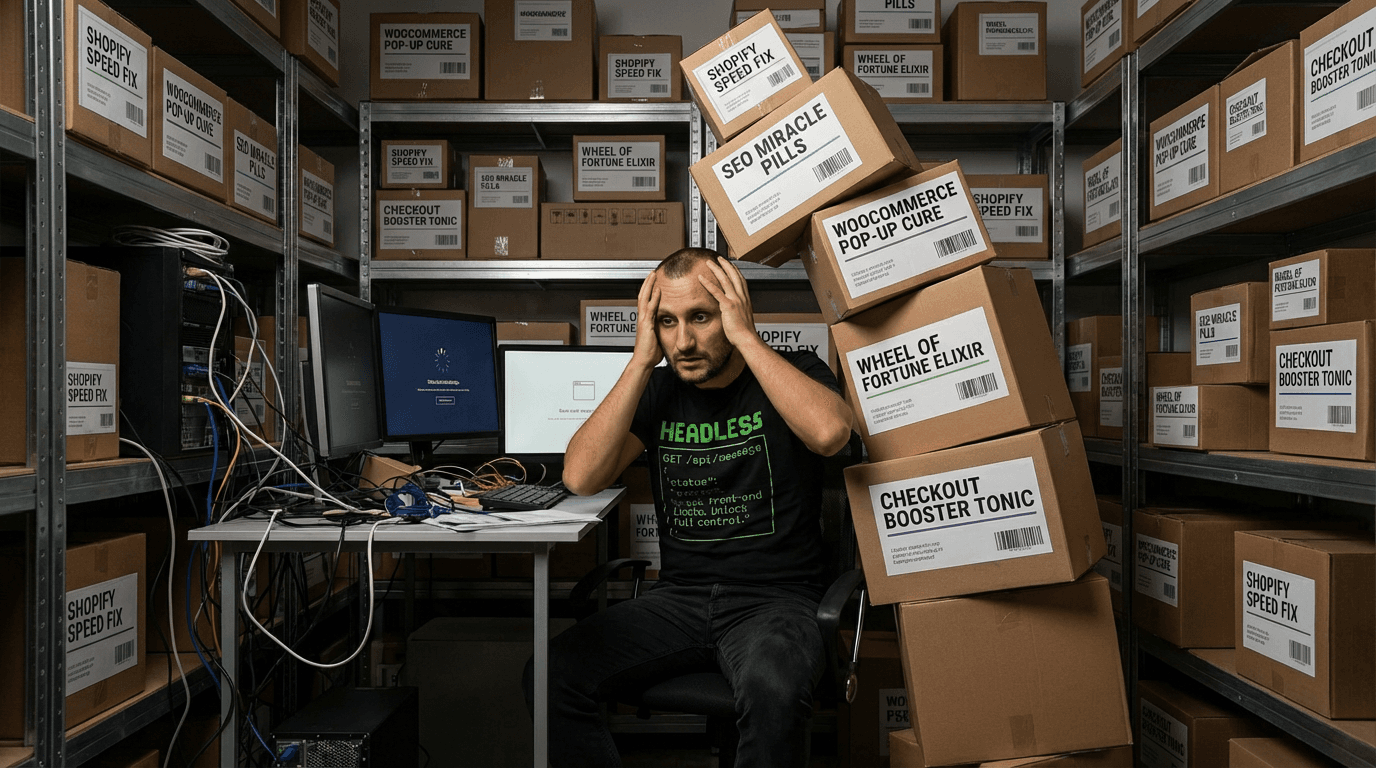
Your E-Commerce Store Doesn’t Need a Pharmacy. It Needs a Detox.
Your e-commerce site isn't slow because you aren't giving it enough traffic. It is slow because you are giving it too many drugs.
Every application you install is a promise of efficiency—and a ticking time bomb. I once thought I was building a modern online store. In reality, I built a museum of bad decisions. If this sounds familiar, you are about to discover why most e-commerce sites suffer from a pathology I call "The Obese Stack," and more importantly, how to cure it.
Technical innovation that fails to solve a real problem is not innovation. It’s just expensive noise.
Sunday, October 26, 2025
written by
Co/Founder
Innovation is Not a Trend: It is a Responsibility We Didn’t Ask For
In the world of e-commerce, we hear promises of "digital transformation" three times a week. Startups promise to reinvent the wheel. Consultants sell roadmaps copied from other consultants. But the truth no one wants to admit is this: 90% of "innovation" is simply wallpaper over unresolved problems.This article isn't about what is possible with technology. It's about what is actually worth doing.
The Consumer is Not a Skinner Pigeon
In 1954, David Ogilvy wrote: "The consumer is not a moron, she is your wife." Sixty years later, in the AI era, this remains the most ignored sentence in history.
I see stores implementing AI just because "it's trendy."
Chatbots that don’t understand human language.
Recommendations so illogical they seem programmed by a blind monkey.
Complexity where a simple search bar would suffice.
The confusion stems from the wrong question. Marketing directors ask: "How can I use this new tech?" They should be asking: "What concrete problem does my customer have right now?"
Your customer wants one thing: a clear path from desire to possession. If your innovations hinder that, they aren't innovations. They are sabotage disguised as modernity.
AI Must Earn Its Keep
Invisible technology is the best technology. When an algorithm sorts products based on what I actually want, I don't think about AI. I think: "Wow, this store really gets me."
That is the AI that works. The AI that fails is the one that announces itself. The chatbot that says "Hi! I am an intelligent assistant!" has already lost.
But there is another dimension: The Cost. Implementing serious AI costs money. And this investment has a single legitimate purpose: to turn into revenue. Not PR. Not likes. Sales.
Ask yourself:
Does this algorithm increase conversion rates?
Does it reduce cart abandonment?
Does it make the customer buy again?
If the answer is no, it is a vanity project. Technology doesn't sell. The result of technology sells.
The False Dilemma: Beauty vs. Speed
Every year I hear the same fight. Designer: "I want to make something magnificent." Developer: "It will make the site slow." Result: A mediocre compromise. Not beautiful, not fast. Just sad.
This dilemma does not exist. Beauty and speed are not enemies. They are allies. Good design is essentially efficient.
However, there is a hierarchy of priorities. If you must choose between a beautiful site that loads in 5 seconds and a mediocre site that loads in 2 seconds, the mediocre site wins.
Why? Biology. After 3 seconds of waiting, 40% of users abandon. It doesn't matter how beautiful your design is if no one stays long enough to see it.
True mastery is finding the 2-3 visual effects that create 80% of the impact, and ruthlessly cutting the rest.
Research as a Shield Against Fashion
The e-commerce market is infested with FOMO (Fear Of Missing Out). "Competitor X launched a Metaverse store. We must do it too!"
Few stop to ask: Do our customers want it? Have we measured the ROI?
This is where serious research comes in. It isn't research for fun. It is protection against charlatans. True research means knowing when to say NO before you burn budget on something that won't work.
We have advised clients against headless commerce when it didn't make economic sense. That isn't conservatism. That is responsibility.
The Responsibility of Those Who Know
There is a dangerous assumption: "If I know how to use a technology, I should use it." False.
True skill isn't knowing what is possible. It is knowing what is worth doing. When an e-commerce store adds complexity that slows down the site or introduces features customers didn't ask for, the experts have failed.
Here is our rule: Is our customer better off? Is their buying journey simpler?
If Yes: Implement.
If No: Discard. No matter how "cool" the tech is.
Everything else is just fashion. And fashion fades. Solved problems remain forever.
More Briefs
Your Site is Beautiful. Too Bad it Doesn’t Sell.
A perfect interface has zero value when the server collapses at the first whip-crack of real traffic.
Accessibility is Not Charity. It is Pure Business.
The Uncomfortable Truth: You Are Closing Your Wallet to 1 in 6 Europeans.
Headless: Everyone Talks About It, No One Knows What It Is
Headless is Not a Trend. It’s the Moment You Stop Being a Prisoner of a Theme.
Your Best Salesperson is Mute (And You Are Ignoring Him)
Your site’s search bar converts three times better than any page you have ever designed. Yet you ignore it like the gross profit of a failed startup.
Your E-Commerce Store Doesn’t Need a Pharmacy. It Needs a Detox.
Your e-commerce site isn't slow because you aren't giving it enough traffic. It is slow because you are giving it too many drugs.
Technical innovation that fails to solve a real problem is not innovation. It’s just expensive noise.
Sunday, October 26, 2025
written by
Co/Founder
Innovation is Not a Trend: It is a Responsibility We Didn’t Ask For
In the world of e-commerce, we hear promises of "digital transformation" three times a week. Startups promise to reinvent the wheel. Consultants sell roadmaps copied from other consultants. But the truth no one wants to admit is this: 90% of "innovation" is simply wallpaper over unresolved problems.This article isn't about what is possible with technology. It's about what is actually worth doing.
The Consumer is Not a Skinner Pigeon
In 1954, David Ogilvy wrote: "The consumer is not a moron, she is your wife." Sixty years later, in the AI era, this remains the most ignored sentence in history.
I see stores implementing AI just because "it's trendy."
Chatbots that don’t understand human language.
Recommendations so illogical they seem programmed by a blind monkey.
Complexity where a simple search bar would suffice.
The confusion stems from the wrong question. Marketing directors ask: "How can I use this new tech?" They should be asking: "What concrete problem does my customer have right now?"
Your customer wants one thing: a clear path from desire to possession. If your innovations hinder that, they aren't innovations. They are sabotage disguised as modernity.
AI Must Earn Its Keep
Invisible technology is the best technology. When an algorithm sorts products based on what I actually want, I don't think about AI. I think: "Wow, this store really gets me."
That is the AI that works. The AI that fails is the one that announces itself. The chatbot that says "Hi! I am an intelligent assistant!" has already lost.
But there is another dimension: The Cost. Implementing serious AI costs money. And this investment has a single legitimate purpose: to turn into revenue. Not PR. Not likes. Sales.
Ask yourself:
Does this algorithm increase conversion rates?
Does it reduce cart abandonment?
Does it make the customer buy again?
If the answer is no, it is a vanity project. Technology doesn't sell. The result of technology sells.
The False Dilemma: Beauty vs. Speed
Every year I hear the same fight. Designer: "I want to make something magnificent." Developer: "It will make the site slow." Result: A mediocre compromise. Not beautiful, not fast. Just sad.
This dilemma does not exist. Beauty and speed are not enemies. They are allies. Good design is essentially efficient.
However, there is a hierarchy of priorities. If you must choose between a beautiful site that loads in 5 seconds and a mediocre site that loads in 2 seconds, the mediocre site wins.
Why? Biology. After 3 seconds of waiting, 40% of users abandon. It doesn't matter how beautiful your design is if no one stays long enough to see it.
True mastery is finding the 2-3 visual effects that create 80% of the impact, and ruthlessly cutting the rest.
Research as a Shield Against Fashion
The e-commerce market is infested with FOMO (Fear Of Missing Out). "Competitor X launched a Metaverse store. We must do it too!"
Few stop to ask: Do our customers want it? Have we measured the ROI?
This is where serious research comes in. It isn't research for fun. It is protection against charlatans. True research means knowing when to say NO before you burn budget on something that won't work.
We have advised clients against headless commerce when it didn't make economic sense. That isn't conservatism. That is responsibility.
The Responsibility of Those Who Know
There is a dangerous assumption: "If I know how to use a technology, I should use it." False.
True skill isn't knowing what is possible. It is knowing what is worth doing. When an e-commerce store adds complexity that slows down the site or introduces features customers didn't ask for, the experts have failed.
Here is our rule: Is our customer better off? Is their buying journey simpler?
If Yes: Implement.
If No: Discard. No matter how "cool" the tech is.
Everything else is just fashion. And fashion fades. Solved problems remain forever.
More Briefs
Your Site is Beautiful. Too Bad it Doesn’t Sell.
A perfect interface has zero value when the server collapses at the first whip-crack of real traffic.
Accessibility is Not Charity. It is Pure Business.
The Uncomfortable Truth: You Are Closing Your Wallet to 1 in 6 Europeans.
Headless: Everyone Talks About It, No One Knows What It Is
Headless is Not a Trend. It’s the Moment You Stop Being a Prisoner of a Theme.
Your Best Salesperson is Mute (And You Are Ignoring Him)
Your site’s search bar converts three times better than any page you have ever designed. Yet you ignore it like the gross profit of a failed startup.
Your E-Commerce Store Doesn’t Need a Pharmacy. It Needs a Detox.
Your e-commerce site isn't slow because you aren't giving it enough traffic. It is slow because you are giving it too many drugs.

Let's talk.
Partners,
not vendors.
No sales scripts. Just an honest conversation about your objectives. Book a slot directly with our experts to see if we are the right strategic fit for your brand.

Let's talk.
Partners,
not vendors.
No sales scripts. Just an honest conversation about your objectives. Book a slot directly with our experts to see if we are the right strategic fit for your brand.
Let's talk.
Partners,
not vendors.
No sales scripts. Just an honest conversation about your objectives. Book a slot directly with our experts to see if we are the right strategic fit for your brand.